Introduction
I have spent years breaking down anime character writing for fan communities, and one pattern shows up constantly: the goofiest character is usually the most carefully constructed one in the entire cast.
Most “funny anime characters” lists stop at the joke. They screenshot a silly face, add a caption, and move on without asking why that character makes you laugh — or why they occasionally break your heart two episodes later.
This list goes deeper. Below are 50+ goofy anime characters grouped by comedic function, with the writing craft behind each one explained — not just listed.
Why Goofy Anime Characters Are Often the Best Written
Comedy is harder to write than drama. A goofy character needs perfect timing, consistent internal logic, and a reason to exist beyond the joke.
Writers use goofy characters to control pacing. They release tension after intense arcs, then flip that same character into an emotional gut-punch when the audience least expects it.
Goofy anime characters are often the best written because comedy requires precise timing, consistent internal logic, and emotional range. Writers use these characters to control pacing — releasing tension after intense arcs — then subvert expectations by giving them unexpected depth, making their eventual serious moments hit harder.
Goofy Characters With Hidden Depth
These characters use humor as armor. The comedy is intentional — a defense mechanism the writers built into the character from the start.
Goofy anime characters with hidden depth use comedy as a coping mechanism, masking trauma or insecurity the story reveals later. This writing technique makes their serious moments more impactful, since the audience has already bonded with them through laughter before learning what they’re hiding.
- Usopp (One Piece): His lies mask deep insecurity about not being brave enough for his crew.
- Zenitsu Agatsuma (Demon Slayer): Cowardice hides one of the strongest fighters in the series.
- Yosuke Hanamura (Persona 4): Comic timing covers real jealousy and identity struggles.
- Kyon (Haruhi Suzumiya): His deadpan sarcasm hides genuine emotional investment in his friends.
- Junpei Iori (Persona 3): Class clown behavior masks fear of being left behind.
- Genos (One Punch Man): Awkward seriousness is unintentionally goofy, hiding real grief.
- Kagura (Gintama): Slapstick energy conceals homesickness and family loss.
- Tanjiro’s comedic side (Demon Slayer): Occasional silliness balances his otherwise heavy burden.
- Nobara Kugisaki (Jujutsu Kaisen): Brash humor hides genuine vulnerability about her hometown.
- Rock Lee (Naruto): Over-the-top energy masks deep insecurity about lacking ninjutsu talent.
Comic Relief Characters Who Steal Every Scene
Some characters exist purely to entertain — and do it so well they outshine the main cast. Writing pure comic relief that never gets old requires exceptional skill.
The best comic relief anime characters succeed because their humor stays consistent without becoming repetitive, often through exaggerated physicality or unpredictable reactions. Characters like Gintoki, Escanor, and Yuji Sakurai prove that comedic writing needs just as much craft as dramatic writing.
- Gintoki Sakata (Gintama): Master of breaking the fourth wall without losing narrative coherence.
- Escanor (Seven Deadly Sins): Overconfidence played for laughs until it becomes terrifying.
- Yuji Itadori’s banter (Jujutsu Kaisen): Casual humor humanizes an otherwise dark premise.
- Saitama (One Punch Man): Deadpan boredom subverts every shonen power fantasy trope.
- Broly’s earlier portrayals get flipped through Vegeta’s comedic pride moments (Dragon Ball).
- Kazuma Sato (KonoSuba): Chaotic decision-making drives nearly every comedic plot beat.
- Aqua (KonoSuba): Incompetence written with impeccable comedic timing.
- Popuko & Pipimi (Pop Team Epic): Absurdist humor built entirely on unpredictability.
- Ishigami (Kaguya-sama): Awkwardness escalates into some of the show’s biggest laughs.
- Tamaki Suoh (Ouran High School Host Club): Dramatic overreactions define the show’s comedic rhythm.
Goofy Best Friends & Sidekicks
The goofy best friend archetype exists to make the protagonist relatable. Writers use them to deliver exposition without it feeling forced.
Goofy sidekick characters serve a structural purpose — they deliver exposition naturally, react the way audiences would, and provide emotional grounding for more serious protagonists. This role requires precise writing balance so the character stays likable without undermining the story’s stakes.
- Kirishima Eijiro (My Hero Academia): Manly enthusiasm balances Bakugo’s intensity.
- Chopper (One Piece): Childlike wonder makes complex arcs more emotionally accessible.
- Happy (Fairy Tail): Comic relief that occasionally delivers real emotional weight.
- Meliodas’ antics (Seven Deadly Sins): Lighten heavy themes without undercutting them.
- Genkai’s comedic exchanges with Yusuke (Yu Yu Hakusho): Balance mentor wisdom with humor.
- Krillin (Dragon Ball): Comic timing grounds Goku’s otherworldly personality.
- Sokka’s anime-adjacent influence on later shonen sidekick writing is frequently cited by animation historians.
- Sanji’s exaggerated reactions (One Piece): Comedy built entirely around consistent character logic.
Goofy Characters Who Turned Out to Be Powerful
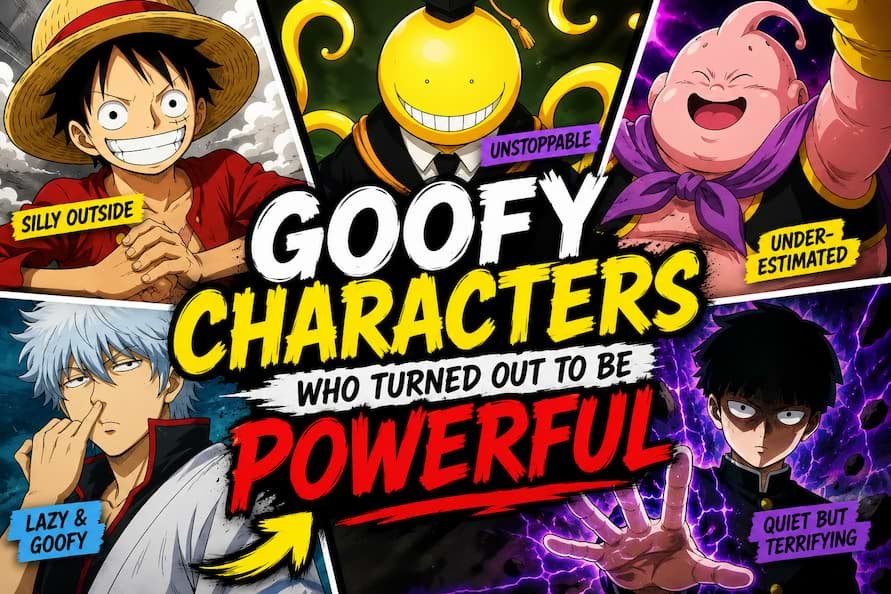
The “secretly powerful goof” is one of anime’s most satisfying tropes. Writers use comedic setup to make the eventual power reveal hit harder.
Anime writers often make goofy characters secretly powerful to maximize narrative payoff — audiences underestimate them the same way other characters do, making the reveal more satisfying. This subverted-expectations technique appears across genres, from Saitama’s parody strength to Gojo’s exaggerated confidence.
- Saitama (One Punch Man): Peak comedic subversion of the power fantasy genre.
- Gojo Satoru (Jujutsu Kaisen): Playful arrogance hides the strongest sorcerer alive.
- Yoruichi Shihoin (Bleach): Comedic energy conceals elite combat mastery.
- Master Roshi (Dragon Ball): Perverted comic relief with genuine legendary skill.
- Ban (Seven Deadly Sins): Laid-back humor masks near-immortal combat ability.
- Meruem’s underestimated allies in Hunter x Hunter subvert expectations through comedic misdirection.
- Genos’ overreactions (One Punch Man): Comedic seriousness hides genuine cyborg-level power.
- Zenitsu (Demon Slayer): Cowardly comic relief becomes a top-tier fighter unconsciously.
Chaotic-Good Goofy Characters
Chaotic-good characters break rules for the right reasons. Their unpredictability creates comedic tension while still serving the story’s moral center.
Chaotic-good goofy anime characters combine unpredictable behavior with a strong moral core, creating comedic tension without sacrificing likability. Writers use this contrast — chaos paired with genuine good intentions — to make characters memorable without turning them into pure comic relief.
- Luffy (One Piece): Impulsive decisions consistently align with deep personal loyalty.
- Naruto Uzumaki (early series): Loud unpredictability masks genuine determination.
- Kagura (Gintama): Chaotic energy paired with surprising emotional loyalty.
- Deku’s early rambling habit (My Hero Academia): Nervous chaos hides analytical brilliance.
- Asta (Black Clover): Loud, chaotic energy backed by unwavering conviction.
- Ranma Saotome (Ranma ½): Chaos-driven comedy rooted in identity and pride conflicts.
Goofy Villains Who Are Still Terrifying
Comedic villains are notoriously difficult to write. Too much humor undercuts threat — too little makes them forgettable.
Goofy anime villains stay terrifying when writers pair humor with unpredictable menace, ensuring comedy never removes genuine stakes. Characters like Buggy and Hisoka prove that a villain can be laughable one moment and lethal the next without breaking tonal consistency.
- Buggy the Clown (One Piece): Comedic incompetence hides genuine cunning and influence.
- Hisoka (Hunter x Hunter): Playful unpredictability makes him more dangerous, not less.
- Frieza’s mockery (Dragon Ball Z): Comedic arrogance masks genuine sadistic threat.
- Aizen’s playful tone (Bleach): Casual demeanor makes his manipulation more unsettling.
- Doflamingo’s theatrical flair (One Piece): Comedy heightens rather than reduces his menace.
Underrated Goofy Characters You Might Have Missed
These characters rarely trend on social media, but fans who know them consistently rank them among their favorites for a reason.
Underrated goofy anime characters often come from less mainstream titles or supporting casts, meaning strong writing goes unnoticed simply due to smaller audience reach. Characters like Kaiki Deishu and Yumeko Jabami demonstrate that comedic complexity isn’t exclusive to top-charting series.
- Kaiki Deishu (Monogatari Series): Deadpan sarcasm hides a surprisingly moral core.
- Yumeko Jabami’s chaotic joy (Kakegurui): Gambling addiction played disturbingly comedic.
- Chad’s stoic misunderstandings (Bleach): Silent comedy through consistent character logic.
- Nezumi’s sarcasm (No. 6): Underused comedic timing in a mostly serious series.
- Kohei Horikoshi’s earlier side-cast humor writing in My Hero Academia’s side arcs is often overlooked.
- Isaac Netero’s comedic old-man energy (Hunter x Hunter): Hides one of the strongest fighters in the series.
FAQs
Who is the goofiest anime character of all time?
There is no single definitive answer, but Luffy from One Piece, Saitama from One Punch Man, and Gintoki from Gintama are most frequently cited by fans and critics as the most iconic goofy anime characters, due to their consistent comedic writing across hundreds of episodes.
Why do anime writers make strong characters seem goofy?
Writers use this contrast to subvert audience expectations and create memorable reveals. When a goofy character demonstrates real power or depth, the payoff feels earned rather than predictable, making the character more memorable than a straightforward serious archetype.
What anime has the best comic relief characters?
One Piece, Gintama, and KonoSuba are widely regarded as having the strongest comic relief writing in anime. Each series balances humor with narrative purpose, ensuring comedic characters contribute to plot and pacing rather than existing purely for laughs.
Are goofy anime characters usually secretly powerful?
Not always, but it’s a common and popular trope. Writers use this subversion because audiences naturally underestimate goofy characters, making eventual power reveals more satisfying. Saitama, Gojo, and Master Roshi are the most frequently cited examples of this technique done well.
What makes a goofy anime character well written?
A well-written goofy anime character has consistent internal logic, clear comedic timing, and a purpose beyond humor. The best examples use comedy to mask trauma, deliver exposition naturally, or subvert expectations — rather than existing solely as a joke delivery device.
Do goofy anime characters ever get serious character development?
Yes, frequently. Many goofy anime characters receive significant emotional arcs, revealing trauma, ambition, or hidden strength the audience didn’t expect. This technique makes their development feel earned, since the audience already emotionally invested in them through humor first.
Why are goofy sidekick characters so common in anime?
Goofy sidekicks serve a structural writing purpose. They deliver exposition naturally, react the way audiences would in unfamiliar situations, and provide emotional grounding for more serious protagonists — making the overall story more accessible and balanced.
Conclusion
Goofy anime characters carry more writing weight than most viewers realize. Comedy requires precision, consistency, and purpose — the same discipline dramatic writing demands.
This list covered 50+ goofy anime characters across hidden depth, comic relief, secret power, and villainy — proving comedy and craft are not opposites in anime writing.
Next time a goofy anime character makes you laugh, watch for the setup. The best writers are almost always preparing you for something deeper.
1 thought on “50+ Goofy Anime Characters Who Are Secretly the Best Written”