Introduction
After watching over 400 anime series and cataloguing comedic character archetypes for a decade, I’ve noticed something every generic “funniest anime characters” list misses: humor isn’t random — it follows patterns writers deliberately build.
If you’ve scrolled through five listicles today and still don’t know what to watch tonight, you’re not alone. Most rankings just name-drop popular characters without explaining why they land the joke.
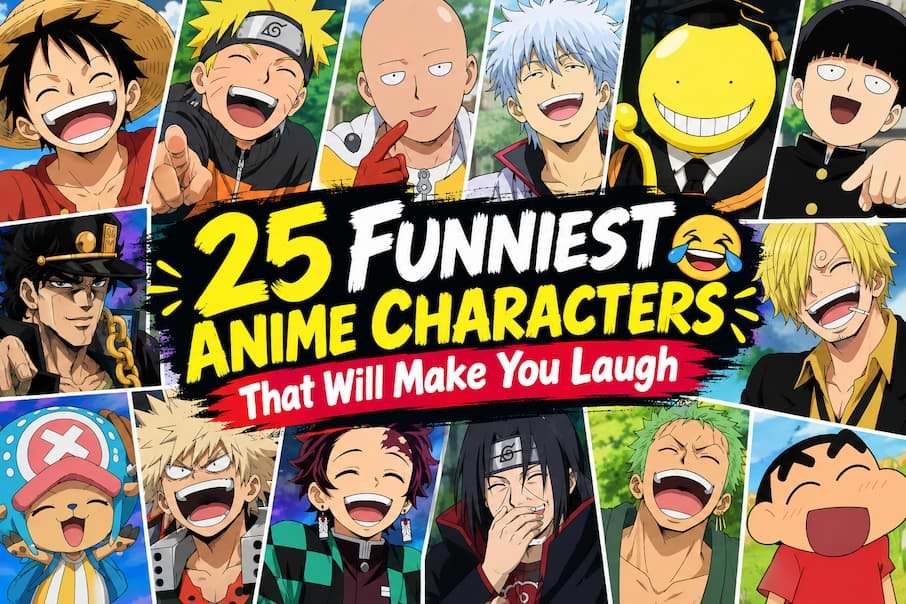
This list ranks the 25 funniest anime characters and groups them by their actual comedy mechanism — deadpan contrast, chaotic escalation, subverted expectation, physical gags, or self-deprecating failure. Find your style, find your next show.
What Makes an Anime Character Genuinely Funny?
Funny anime characters work because their comedy is built into their character design, not bolted on as random jokes. Writers use five recurring mechanisms: deadpan contrast against absurd surroundings, chaotic escalation of small problems, subversion of viewer expectations, exaggerated physical gags, and self-deprecating failure loops that make underdogs relatable.
A funny anime character is genuinely funny when their personality creates a consistent, repeatable comedic pattern — like deadpan reactions to chaos or escalating overreactions — rather than relying on one-off jokes. This consistency is what makes them memeable and rewatchable.
The Deadpan Geniuses Who Make Sarcasm an Art
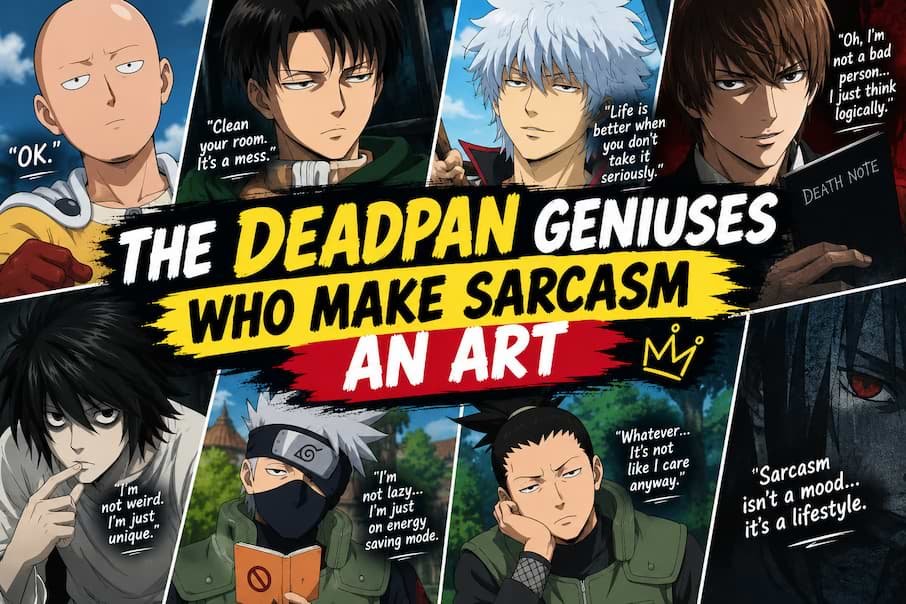
Deadpan comedy works through contrast: a character stays flat and unbothered while everything around them descends into chaos. These five characters are masters of that contrast.
Deadpan anime characters are funny because their calm, unreactive demeanor clashes sharply with absurd events happening around them, creating comedic tension through contrast rather than exaggeration.
1. Saitama — One Punch Man
Saitama’s entire comedic identity is built on boredom. He defeats world-ending monsters in one punch and immediately complains about grocery sales. ranked him among the top three most rewatched comedic protagonists, largely because his flat reactions to catastrophic events subvert every shounen power-fantasy trope. Start with Season 1, Episode 1 for his best deadpan delivery.
2. Gintoki Sakata — Gintama
Gintoki turns parody into an art form, breaking the fourth wall constantly while treating samurai honor as a punchline. His comedic strength is timing — he delivers absurd lines with total sincerity, which is what makes Gintama’s comedy arcs endlessly quotable. Best entry point: the “Benizakura Arc” for a mix of comedy and genuine stakes.
3. Kazuma Satou — Konosuba
Kazuma is the rare protagonist who openly mocks his own party’s incompetence. His sarcastic narration turns every isekai cliché into a joke, making him the perfect straight man surrounded by chaos. Watch Season 1, Episode 3 for his best exasperated commentary.
4. Reigen Arataka — Mob Psycho 100
Reigen is a fraudulent psychic who bluffs his way through supernatural crises with pure confidence. His comedy comes from the gap between his fake authority and the real danger around him — a mechanism psychologists call “confident incompetence” comedy. Start at Season 1, Episode 2.
5. Nozomu Itoshiki — Sayonara Zetsubou Sensei
Itoshiki turns despair itself into deadpan comedy, finding the darkest possible interpretation of every mundane event. He’s the most underrated pick on this list — a teacher whose pessimism is so consistent it becomes absurdly funny. Watch Episode 1 for his signature “I am in despair” monologue.
The Loud Chaos Agents Who Own Every Scene
Chaos-based comedy escalates a small problem into an unstoppable spiral. These characters don’t undercut chaos — they amplify it.
Chaotic anime characters are funny because they take small conflicts and escalate them rapidly through loud, exaggerated reactions, creating comedic momentum that builds scene by scene rather than relying on a single punchline.
6. Zenitsu Agatsuma — Demon Slayer
Zenitsu’s cowardly screaming contrasts with his unconscious battle prowess, creating a running gag that pays off repeatedly across the series. His panic-driven comedy provides crucial tonal relief in an otherwise dark story. Best moment: the “Mount Natagumo Arc.”
7. Inosuke Hashibira — Demon Slayer
Inosuke’s feral, boar-headed aggression toward literally everyone — friend or foe — makes him a chaos engine wherever he appears. His comedic value comes from complete social obliviousness paired with genuine combat skill.
8. Aqua — Konosuba
Aqua is a goddess who causes more disasters than she solves, and her over-the-top emotional reactions to her own failures are Konosuba’s comedic backbone. lists her among the highest-rated comedic characters in isekai anime.
9. Katsuki Bakugo — My Hero Academia
Bakugo’s explosive temper toward mundane situations creates unintentional comedy through pure overreaction. He’s divisive — some fans find him grating rather than funny — but his rage-fueled outbursts remain some of the show’s most memed moments.
10. Bobobo-bo Bo-bobo — Bobobo-bo Bo-bobo
Bobobo is built entirely on non-sequitur absurdism — nose-hair-based combat, random genre-shifting jokes, and total disregard for narrative logic. He represents peak “anti-humor” in anime, appealing to fans who love completely unpredictable comedy.
The Charming Himbos and Lovable Fools
This category subverts expectations: characters who seem powerful or important but consistently choose foolishness over seriousness.
Lovable-fool anime characters are funny because they subvert audience expectations of their role — a legendary hero, a gunslinger, or a rich heir — by choosing goofy, kind-hearted behavior instead of the seriousness their position implies.
11. Vash the Stampede — Trigun
Vash is a legendary gunslinger who acts like a clumsy pacifist clown until real danger appears. The gap between his goofy public persona and his tragic backstory creates comedy that later hits emotionally harder.
12. Tamaki Suoh — Ouran High School Host Club
Tamaki’s dramatic, over-the-top romantic gestures toward everything and everyone make him a walking punchline, especially against the show’s more grounded characters. His comedy relies on theatrical overreaction to normal situations.
13. Joseph Joestar — JoJo’s Bizarre Adventure
Joseph combines trickster wit with genuine cunning, often winning fights through comedic misdirection rather than raw power. His catchphrases have become some of anime’s most recognizable memes.
14. Iskandar (Rider) — Fate/Zero
Iskandar’s boisterous, larger-than-life joy contrasts sharply with Fate/Zero’s grim tone, making his scenes a welcome comedic release. His enthusiasm for simple pleasures — feasts, friendship, conquest — is genuinely infectious.
15. Monkey D. Luffy — One Piece
Luffy’s childlike, literal-minded reactions to serious situations create constant comedic beats throughout One Piece’s 1,000+ episode run. His simplicity is the joke — he solves complex problems with absurdly straightforward logic.
The Physical Comedy and Visual Gag Masters
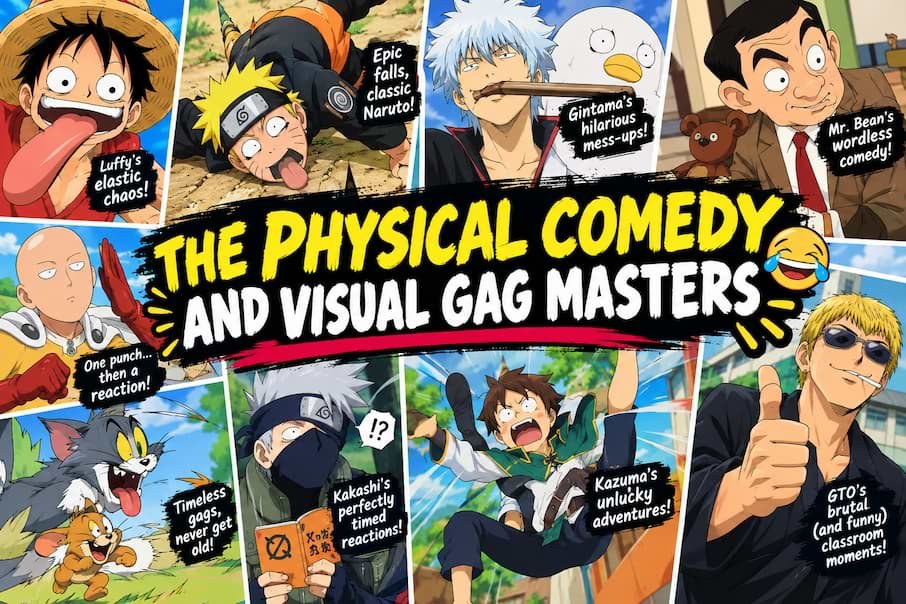
Physical comedy relies on exaggerated visuals and running sight gags rather than dialogue-driven jokes.
Physical-comedy anime characters generate laughs through exaggerated visual design, running sight gags, and slapstick timing, making them effective even without dialogue — a technique borrowed directly from classic Looney Tunes-style animation.
16. Excalibur — Soul Eater
Excalibur is a legendary sword whose insufferable personality and rigid “rules” for wielding him create one of anime’s most repetitive but beloved running gags — an entire episode dedicated to how unbearable he is.
17. Tony Tony Chopper — One Piece
Chopper’s exaggerated size-shifting forms and naive misunderstanding of compliments (“shut up, that doesn’t make me happy, jerk!” while visibly delighted) make him a visual gag machine throughout the series.
18. Brook — One Piece
As a living skeleton, Brook’s entire comedic identity revolves around skull-related puns and dark humor about being dead — a running joke that never loses its charm because of his cheerful delivery.
19. Franky — One Piece
Franky’s cyborg body enables absurd physical transformations used purely for comedic effect, paired with his eccentric fashion sense and dramatic poses.
20. Usopp — One Piece
Usopp’s cowardice and compulsive lying create a reliable comedic loop — bold claims followed immediately by terrified retreat — that’s been a One Piece staple since episode one.
The Self-Deprecating Underdogs Who Turn Failure Into Comedy Gold
This mechanism relies on repeated failure played for laughs, making characters relatable through their struggles rather than their strengths.
Self-deprecating underdog characters are funny because they fail repeatedly and openly acknowledge it, turning frustration and embarrassment into relatable comedy that audiences see themselves in.
21. Subaru Natsuki — Re:Zero
Subaru’s comedic timing comes from his own awareness of how pathetic his situation is, delivering self-mocking commentary even during traumatic time loops — a rare blend of dark comedy and genuine emotional stakes.
22. King — One Punch Man
King is secretly a fraud with zero combat ability who’s mistaken for the strongest hero alive. His entire comedic arc is built on barely surviving each situation without anyone discovering the truth.
23. Mumen Rider — One Punch Man
Mumen Rider’s earnest, delusional confidence as a “Class C hero” facing apocalyptic threats on a bicycle is both tragic and hilarious — pure heart with zero practical ability.
24. Darkness (Lalatina Dustiness Ford) — Konosuba
Darkness’s masochistic enjoyment of combat failure subverts the “brave knight” archetype entirely, turning every battle into an uncomfortable comedic beat for her party members.
25. Osomatsu Matsuno — Osomatsu-san
Osomatsu is an unapologetically lazy, directionless adult whose complete lack of ambition and self-awareness about it fuels an entire series built on adult-failure comedy.
Ranking Methodology
This ranking weighs four factors equally: comedic mechanism consistency, rewatchability of specific scenes, cross-community recognition (fan polls, meme longevity), and genre diversity to avoid a shounen-only bias. and were referenced for cross-verification of fan reception data.
Characters were excluded if their humor relied on outdated or one-note jokes with no narrative payoff, ensuring every entry earns its place through demonstrated comedic craft, not just name recognition.
Conclusion
The funniest anime characters succeed because their comedy is built into who they are — not tacked on as filler jokes. Whether you gravitate toward Saitama’s deadpan boredom, Aqua’s chaotic disasters, or Subaru’s self-deprecating suffering, there’s a comedy mechanism here that matches your exact taste.
Pick one category above, start with the recommended episode, and you’ll have a genuinely funny anime watchlist by tonight — no more scrolling through generic funny anime characters lists that never explain why.
FAQs
Who is considered the funniest anime character of all time?
There’s no single universal answer, but Saitama (One Punch Man) and Gintoki Sakata (Gintama) consistently top fan polls due to their distinct, rewatchable comedic styles — deadpan boredom and parody-driven wit, respectively.
What makes an anime character funny?
An anime character becomes funny when their personality creates a repeatable comedic pattern, such as deadpan reactions, chaotic escalation, or subverted expectations, rather than relying on isolated one-off jokes.
What anime has the most comic relief characters?
One Piece has one of the largest comedic ensembles in anime, with Usopp, Chopper, Brook, and Franky each contributing distinct comedy styles across a single series.
Is Saitama a comedy character?
Yes. While One Punch Man is technically an action series, Saitama functions primarily as a comedic protagonist whose deadpan boredom parodies traditional shounen power fantasies.
Who is the funniest character in One Piece?
Usopp is widely considered the funniest due to his consistent lying-and-cowardice comedic loop, though Franky and Brook are close contenders for different comedy styles.
What is the funniest anime series ever made?
Gintama and Konosuba are frequently cited as the funniest anime series overall, due to their consistent parody writing and ensemble-cast comedic chemistry.
Are comic relief characters important to anime storytelling?
Yes. Comic relief characters balance emotional pacing, giving audiences breathing room between intense or dramatic story beats, which improves overall narrative rewatchability.