Introduction
Finishing Classroom of the Elite and immediately searching for the manga is the obvious move, and then most fans hit a confusing wall: the manga doesn’t actually continue past where the anime stopped, at least not yet.
That’s not a bug in your search results. It’s because Classroom of the Elite has three separate versions of its story: an original light novel, a manga adaptation, and the anime, and they all move at very different speeds. If you want to know what happens next after the anime, reading the Classroom of the Elite manga is only part of the answer.
This guide explains exactly how the three formats relate, where each one currently stands, and where you should start reading depending on how far ahead of the anime you actually want to get.
How the Story Sources Fit Together
Classroom of the Elite started as a light novel series written by Shogo Kinugasa, and everything else, the manga and the anime, is an adaptation of that original text. This matters because the light novel is the only format that’s actually ahead of the anime right now. Both the manga and the anime are working through the same source material at different paces, which is why fans get confused about which one to read next.
The light novel is the original and most advanced version of the story, the anime adapts it fastest by compressing multiple volumes per season, and the manga adapts it slowest, meaning it’s currently behind where the anime left off. If you want new story content, the light novel is your only reliable option.
Why the Manga Isn’t a Direct Continuation
A manga adaptation typically releases new chapters monthly at best, while an anime season can compress several light novel volumes into just 12 to 13 episodes over a few months. That pacing gap adds up fast. By the time an anime season wraps, the manga covering the same arc is often still partway through material the anime already finished.
Where Each Format Currently Stands
As of this writing, the anime has adapted a significant portion of the first-year light novel arcs across its released seasons, the manga adaptation is progressing through earlier arcs at a slower chapter pace, and the light novels have moved well beyond both, including into the Year 2 continuation series that picks up after the first-year story concludes.
Where the Classroom of the Elite Anime Leaves Off
Before deciding what to read next, it helps to pin down exactly where the anime stopped, since “after the anime” means something different depending on which season you last watched.
The anime has adapted the story through specific arcs of the first-year light novels across its released seasons, with each season generally covering one or two volumes’ worth of material. Confirm your exact stopping point by checking which arc your last watched episode covered before choosing where to pick up reading.
If you finished an early season, you’re likely somewhere in the first several light novel volumes, covering the initial class ranking system and early tests.
If you’ve watched further seasons, you’ve likely reached arcs involving deeper class rivalries and more personal reveals about the protagonist, Kiyotaka Ayanokoji.
Rather than relying on a guessed episode-to-volume match, it’s worth checking a dedicated episode-to-volume guide before you commit to a starting chapter, since getting this wrong means either re-reading material you’ve already seen or missing key setup.
Should You Read the Manga or the Light Novels Next
This is the real decision point, and it depends less on preference and more on what you actually want out of continuing the story. Each format offers something the other doesn’t.
Read the manga if you want a visual continuation of scenes you already know from the anime and don’t mind moving slower than the anime’s pace. Read the light novels if you want to know what actually happens next in the story, since only the light novels currently extend past where the anime and manga both stop.
What the Manga Offers That the Anime Doesn’t
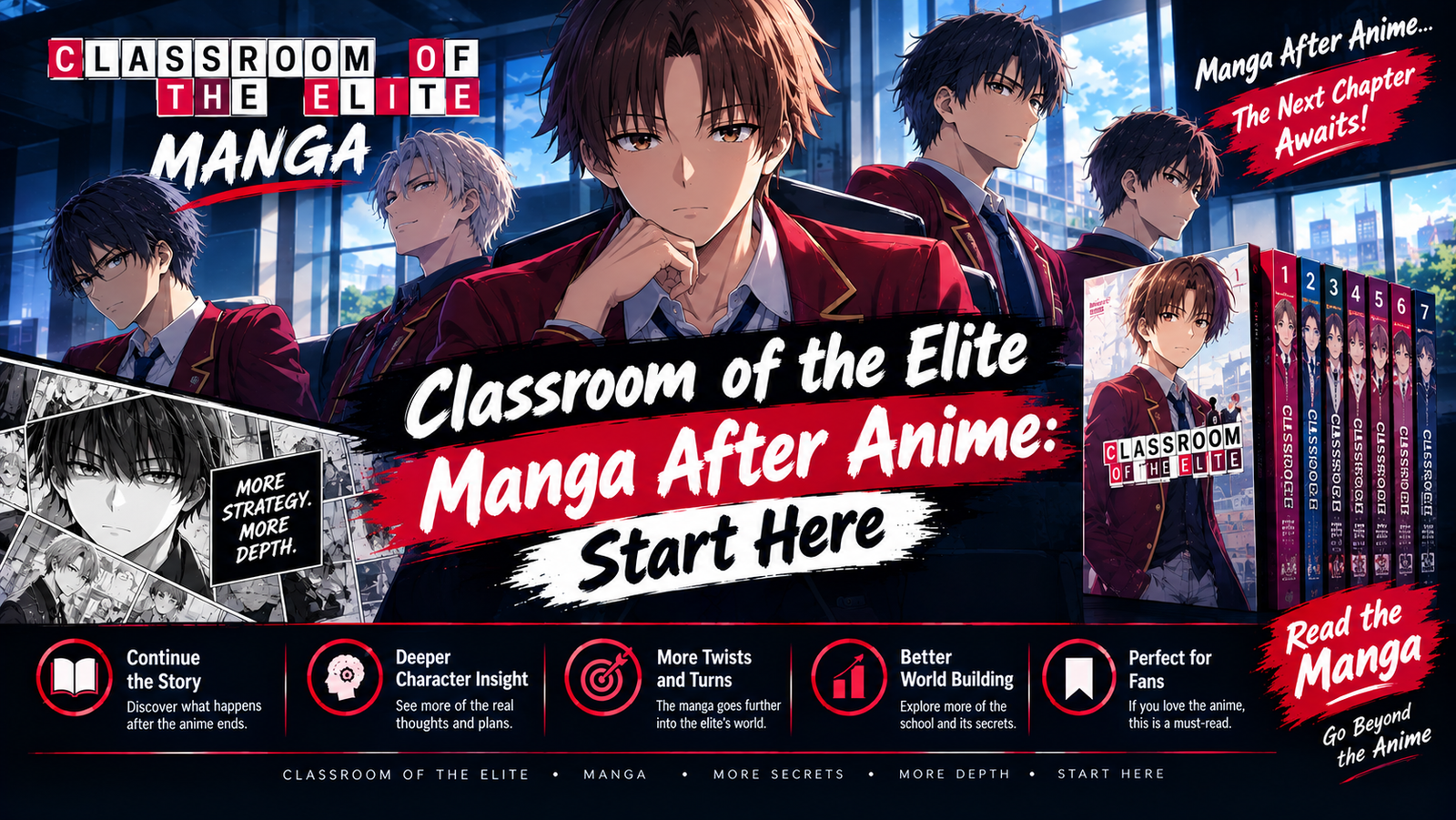
The manga adds visual detail to scenes the anime compressed or cut for time, and it lingers on character expressions and internal monologue in a way that a 20-minute episode often can’t.
For a story built heavily on strategic manipulation and unspoken subtext, seeing a character’s facial reaction drawn out panel by panel adds a layer the anime sometimes rushes past. It’s also a much lighter time commitment than starting a full light novel volume if you just want a bridge back into familiar scenes.
What Only the Light Novels Can Give You
The light novels are the only format currently telling you what happens after the point where both the anime and manga stop. They also include extended internal narration from Kiyotaka’s perspective, which is a meaningful part of the story’s appeal since so much of his strategy stays hidden from other characters and, by extension, from the reader in visual formats. If your main goal is finding out what happens next, this is genuinely the only path forward right now.
Where to Start Reading the Manga After the Anime
If you’ve decided the manga is your next step, the goal is finding the chapter that lines up with your last watched episode without skipping content or re-reading scenes you’ve already seen.
Start the manga at the chapter that corresponds to the light novel volume immediately after wherever your last watched anime season stopped, not simply “the next available chapter,” since manga arcs don’t always align cleanly with anime episode breaks. Cross-check a volume guide before diving in.
Finding Your Chapter Starting Point
The safest method is working backward from content, not numbers. Pick a distinctive scene or line of dialogue from the final episode of the season you watched, then search for that same scene in the manga to confirm which chapter it appears in. Once you’ve located it, you know the manga chapters that follow are genuinely new to you rather than a re-telling of material you’ve already watched.
What to Expect From the Art and Pacing
The manga adaptation reads slower than the anime scene for scene, since it spends more panels on internal thought and quiet character beats than the anime’s dialogue-driven pacing allows. Don’t expect the manga to suddenly race ahead of familiar territory either; because it’s adapting the same light novel material as the anime, you’ll likely spend a good stretch of chapters in scenes you technically already know the outcome of, just told with more visual nuance.
Catching Up on the Story With the Light Novels
If chapter-hunting through manga back catalog sounds tedious and you’d rather just find out what happens, the light novels are the more direct route, even though they require more reading per sitting.
Start the light novels at the volume immediately following whatever content your last anime season covered, generally somewhere in the middle volumes if you’ve watched multiple seasons. The light novels also continue into a separate Year 2 series once the first-year story concludes.
Volume Starting Points for Light Novel Readers
Light novel volumes are numbered sequentially and map more predictably to story arcs than anime episodes do, since each volume is typically a self-contained arc rather than a fragment split across episodes A reasonable approach is picking up one volume before where you think the anime stopped, reading the opening chapter to confirm it feels familiar, and then continuing forward from there once you hit new material.
The Year 2 Arc and What It Changes
Once the first-year light novel arc wraps, the story continues in a separate Year 2 series that shifts some dynamics, introduces new classmates and rivalries tied to the second academic year, and deepens Kiyotaka’s evolving relationships with characters from the first arc. This transition is a natural jumping-off point if you’ve finished all available first-year material, since it functions almost like a soft reboot of the stakes while keeping the core cast intact.
Common Mistakes Fans Make Jumping Into the Source Material
A few recurring mistakes cause fans to either waste time re-reading familiar content or accidentally spoil themselves on major reveals. Most of these are easy to avoid once you know they exist.
The biggest mistakes are assuming the manga picks up new content right where the anime stopped, starting a light novel volume based on episode count instead of actual story content, and searching general wikis that mix spoilers from all formats into one page without warning.
- Assuming manga and anime move at the same pace, then accidentally re-reading chapters already covered by the anime
- Picking a light novel volume by guessing episode-to-volume ratios instead of confirming by scene content
- Reading general fan wikis that blend spoilers from light novel, manga, and anime without separating them by format
- Skipping the Year 2 transition entirely because it’s technically a “new series,” missing major character development as a result
- Assuming the manga is close to finished simply because the anime has had multiple seasons, when the two are on very different production schedules
That last point trips up a lot of fans specifically. A show getting a new anime season doesn’t mean the manga adaptation sped up to match it; the two are produced by entirely separate teams on entirely separate schedules.
Where to Legally Read Classroom of the Elite
Once you know which format and starting point you want, the next question is where to actually read it without resorting to unofficial scan sites, which often carry both legal risk and real safety concerns like malware-loaded ads.
Official English releases of both the manga and light novels are available through licensed publishers and major digital retailers, along with library-based digital lending apps in some regions. Checking a title’s official publisher page is the safest way to confirm current volume availability.
Digital storefronts and e-reader apps typically keep official releases current with the latest published volumes, which matters here since new volumes continue to release. Physical bookstores and library apps are also worth checking, since some regions get official volumes through library lending platforms before or alongside retail release, depending on the publisher’s distribution deal.
FAQs
Does the Classroom of the Elite manga follow the anime exactly?
Not exactly. The manga adapts the same original light novel source as the anime, but it moves at a slower chapter pace, so it currently sits behind where the anime has reached. Expect some scenes to differ slightly in emphasis or detail even when covering the same plot beats.
Where does the Classroom of the Elite anime leave off?
The anime has adapted a portion of the first-year light novel arcs across its released seasons, with each season generally covering one to two volumes’ worth of story. The exact stopping point depends on which season you last watched, so cross-checking a volume guide is the most reliable way to confirm.
Should I read the manga or the light novels next?
Read the manga if you want a visual continuation of familiar scenes and don’t mind a slower pace than the anime. Read the light novels if your main goal is finding out what actually happens next in the story, since they’re currently the only format ahead of the anime.
Is the Classroom of the Elite manga finished?
No, the manga adaptation is ongoing and has not caught up to the full light novel source material, let alone finished it. New chapters continue releasing periodically, though at a noticeably slower pace than the anime’s season releases.
What volume does the anime end on?
This depends on which season you’ve watched, since each season adapts a different chunk of the light novel volumes. The safest way to confirm your exact stopping point is matching a specific scene from your last watched episode to its corresponding volume using a fan-maintained comparison guide.
Is there a Classroom of the Elite Year 2 manga?
The Year 2 story arc exists as a continuation within the light novel series, picking up after the first-year arc concludes. Manga adaptation of Year 2 content depends on the main manga first catching up to that point in the story, so check current release status before assuming it’s available.
Conclusion
The short version is this: the Classroom of the Elite manga is a nice way to revisit familiar scenes with extra visual detail, but it won’t tell you what happens next, because it’s currently behind the anime rather than ahead of it.
If you actually want new story content after finishing the anime, the light novels are your real answer, and the Year 2 arc is where the story keeps going once the first-year material wraps. Confirm your exact stopping point by matching scenes rather than guessing by episode count,
then pick your format based on whether you want visuals or forward progress. Start with one volume or a handful of manga chapters, confirm it feels new, and go from there.