Introduction
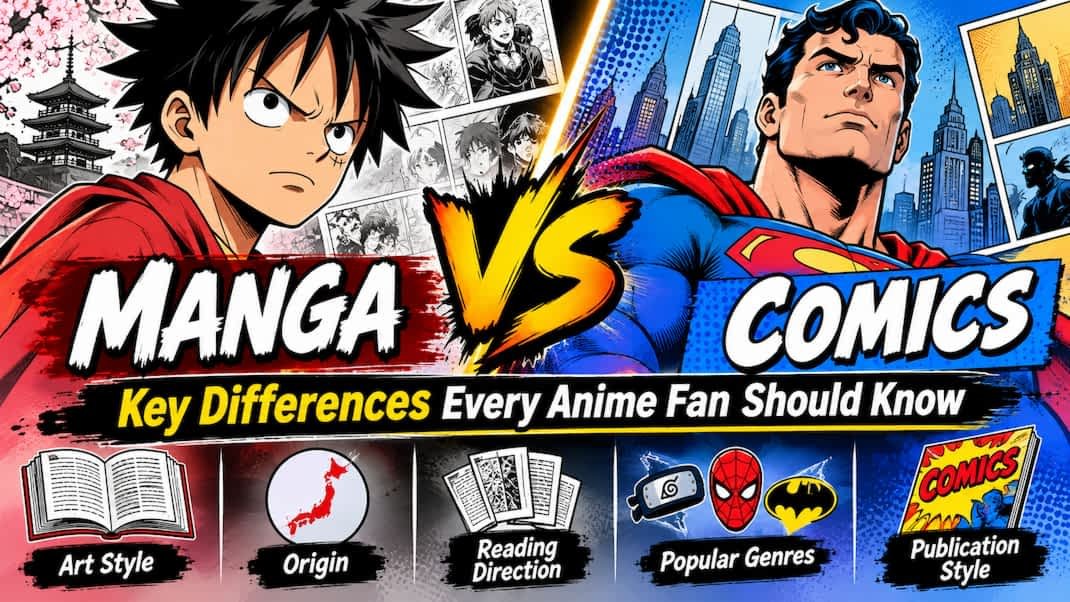
Manga and comics are not the same thing. Manga means comics from Japan: usually black-and-white, read right-to-left, created by one artist or a small team, and collected into complete story arcs. American comics are full-color, read left-to-right, made by rotating creative teams, and often set in shared universes that run for decades.
YugenAnime wrote this manga vs comics guide because anime fans ask the question constantly. You finished an anime, heard the manga continues the story, and then someone handed you a Marvel trade paperback. Both are “comics” in the broad sense. In practice, they are different mediums with different rules.
This guide compares the two across nine dimensions: origin, art style, reading direction, story structure, format, genres, publishing, price, and the superhero barrier. By the end, YugenAnime’s anime-fan readers will know exactly which shelf to walk to first.
How YugenAnime compared manga and comics
YugenAnime compared manga and comics the way a reader experiences them: holding the book. The comparison covers what each medium is, how it looks, how you read it, how stories are built, and what it costs. Every historical claim below is tied to a named, verifiable source.
Definitions come from Wikipedia’s manga entry and Britannica’s graphic-novel and comic-strip entries, all checked in-session. Creator credits use full names with descriptors. No sales statistics are used, because none could be verified to a primary source in this session.
What was left out: manhwa (Korean comics) and bande dessinée (Franco-Belgian comics) deserve their own guides. This article is manga vs. American comics only.
A ninth dimension, the superhero barrier, was added because it is the number-one reason anime fans quit comics early. It is a publisher problem rather than a medium problem, so the guide treats it as its own section.
What manga actually means
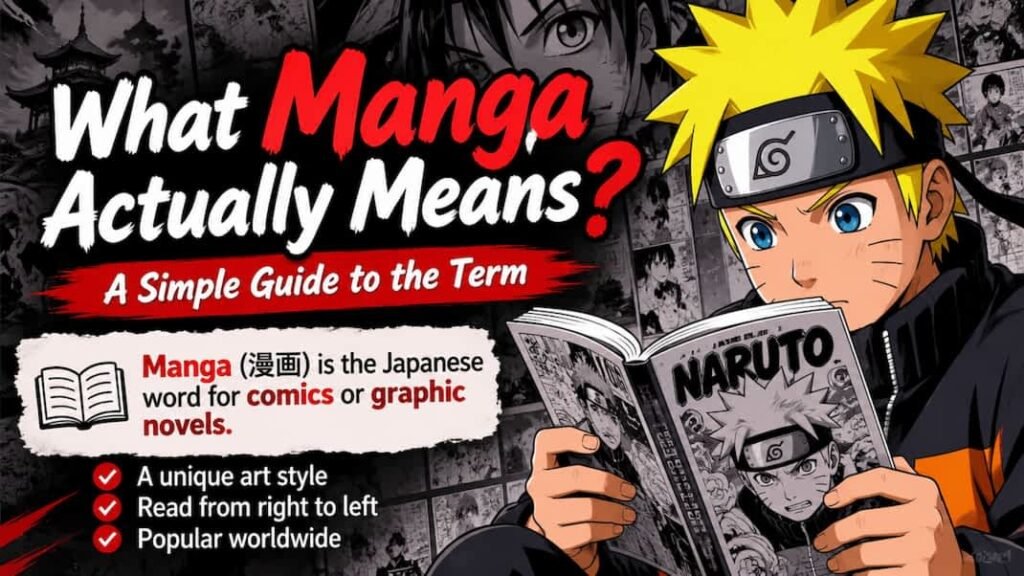
Manga are comics or graphic novels originating from Japan, in the Japanese language, conforming to a style developed there in the late 19th century. That definition comes from Wikipedia’s manga entry, verified for this article. In everyday use, anime fans mean something narrower: the black-and-white serialized stories behind their favorite shows.
The manga pipeline is built for readers. Chapters serialize weekly or monthly in thick anthology magazines like Weekly Shonen Jump. Popular series are then collected into tankobon volumes, the small paperbacks lining every manga shelf. One creator, the mangaka, usually drives both story and art, sometimes with assistants.
English-language comics drawn in a manga style are sometimes called OEL manga (original English-language manga). The bridge between the two worlds already exists, and YugenAnime’s readers cross it every day.
For anime fans, the definition matters because it settles the shelf question. If a book is Japanese in origin and style, it sits with manga; everything else sits with comics. That one rule prevents most beginner confusion.
What American comics actually are
American comics grew out of newspaper strips, not magazines. Britannica traces the modern-format comic book to the United States in the 1930s: the first true comic books were marketed in 1933 as giveaway advertising premiums, and by 1935 titles like Famous Funnies were selling in large quantities.
Then came the pivot that defined the industry. Action Comics began in 1938, and in its pages Superman appeared, created by writer Jerry Siegel and artist Joe Shuster. The superhero formula took over the American market, and the shared-universe model followed: characters from different series inhabit one continuity, written by rotating teams over decades.
Britannica also records the term’s evolution. Will Eisner, the American comics artist who created The Spirit, popularized the phrase “graphic novel” with his 1978 book A Contract with God, and Other Tenement Stories. In American usage, a graphic novel usually means a complete comic story published as a book rather than a periodical.
For anime fans, this history explains the culture shock. Manga was built as a creator-driven magazine industry; American comics were built as a character-driven periodical industry. Every later difference in this guide grows out of that split.
Comics vs manga art: black-and-white vs full color
YugenAnime’s manga vs comics comparison starts with the most visible difference. Manga is overwhelmingly black-and-white. Screentones, ink work, and panel flow carry the art, and color appears only on occasional cover pages or special chapters. This is an economic choice as much as an aesthetic one: weekly serialization at manga’s pace is only possible without full-color production.
American comics are overwhelmingly full-color. Colorists are credited crew members, and the palette is part of the storytelling. Even indie and literary comics, which sometimes use limited palettes, are colored deliberately rather than by default.
Neither is “better.” Manga’s monochrome rewards expressive linework and speed; comics’ color rewards atmosphere and spectacle. Anime fans moving between the two should expect the bigger adjustment in manga-to-comics direction, where the eye must learn to read color as information.
The adjustment is worth making. Comics colorists use palette shifts the way anime uses lighting: a cold blue sequence means dread, a warm wash means memory. Once you read color as a storytelling tool, comics feel richer, not just louder.
Reading direction: right-to-left vs left-to-right
YugenAnime flags reading direction because it trips up every beginner once. Manga reads right-to-left, top-to-bottom: you open what looks like the back cover, and panels flow in the opposite direction from Western books. Publishers keep the original orientation in English editions, so the art is never flipped.
American comics read left-to-right, like any Western book. There is nothing to learn here for English readers, which is one reason comics feel instantly accessible to anime fans who have never touched manga.
The practical advice is simple. With manga, check the publisher’s reading-direction note on the first page and trust it for ten pages; your eyes adapt fast. With comics, just start reading.
One more tip for anime fans: never “fix” manga by reading it left-to-right. The panel compositions, page turns, and double-page spreads are all designed for right-to-left flow. Reading backwards breaks jokes, reveals, and action beats that the artist placed deliberately.
YugenAnime considers story structure the deepest manga vs comics difference. Manga is usually one creator’s story with a beginning, middle, and end. The mangaka plans an arc, the series runs its course, and the collected volumes tell a complete tale. Even long runners like One Piece are a single continuous narrative under one author.
American comics, especially Marvel and DC superhero titles, run on the shared-universe model. Dozens of series share one continuity, written and drawn by rotating creative teams across decades. A character’s story never truly ends; it passes from team to team. This is why comics have reading orders, reboots, and crossover events.
The trade-off is real. Manga gives you closure and authorial voice. Comics give you an endless world and many interpretations of beloved characters. Anime fans who love self-contained seasons usually prefer manga’s structure; fans who love sprawling franchises adapt to comics faster.
There is a middle path. Many acclaimed comics are finite miniseries with real endings: Watchmen by writer Alan Moore and artist Dave Gibbons, or the six-issue runs YugenAnime recommends for beginners. You can have comics’ craft with manga’s closure.
Formats and price: tankobon vs single issues and trades
YugenAnime’s format comparison uses real volumes, because abstract format talk confuses beginners. Here is what each medium actually sells you.
- Item: Demon Slayer: Kimetsu no Yaiba, Vol. 1
- Source: VIZ Media (English edition)
- Best use: Seeing the standard manga format: a small black-and-white paperback collecting several chapters.
- Sample usage: Buy Vol. 1 of any manga to test a series; volumes are cheap, uniform, and numbered in order.
- Item: A monthly single issue (for example, a current Marvel or DC release)
- Source: Marvel Comics / DC
- Best use: Understanding the periodical root of American comics: ~20 pages of story plus ads, one chapter of a longer arc.
- Sample usage: Skip single issues as a beginner; they assume you follow the series monthly.
- Item: Ms. Marvel, Vol. 1: No Normal
- Source: Marvel Comics (trade paperback)
- Best use: Seeing the beginner-friendly comics format: five to six issues collected in reading order, no ads.
- Sample usage: Buy the trade paperback the way you buy a manga volume; it is the direct equivalent.
- Item: Nimona (single-volume graphic novel)
- Source: HarperTeen
- Best use: Seeing the graphic-novel format: a complete story published directly as a book.
- Sample usage: The closest comics equivalent to a complete manga series in one purchase.
- Item: Watchmen (collected edition)
- Source: DC Comics
- Best use: Seeing the prestige comics format: a twelve-issue miniseries with a real ending, collected as one book.
- Sample usage: Read it as proof that American comics do finite, literary stories; writer Alan Moore and artist Dave Gibbons are credited by name.
- Item: Scott Pilgrim, Vol. 1: Precious Little Life
- Source: Oni Press
- Best use: Seeing the indie comics format: a creator-owned series in manga-influenced art, collected like manga volumes.
- Sample usage: The bridge purchase for anime fans; if the art clicks, the format already feels familiar.
The pricing logic follows the format. Manga volumes are standardized and affordable, which is why collecting a full series is normal. American single issues are cheap individually but add up fast; trades cost more per book but deliver complete arcs. Beginners in both mediums should buy collected volumes, never single chapters or issues.
Price reality check for anime fans: a full manga series of 20 volumes costs roughly the same as four or five American trade paperbacks. Manga rewards completists; comics reward samplers. Budget one volume or one trade per month and both habits stay affordable.
The superhero barrier: why anime fans bounce off Marvel and DC
YugenAnime’s manga vs comics guide would be incomplete without the elephant in the room. Most anime fans who try American comics start with Marvel or DC, hit a wall of continuity, and conclude “comics aren’t for me.” The medium gets blamed for what is really a publisher problem.
The barrier has three layers. First, the characters are corporate properties, not authorial visions; Batman has had hundreds of writers, so there is no single “true” version to start with. Second, the continuity is cumulative; a 2026 issue can reference a 1986 storyline. Third, the marketing pushes events and crossovers, which are the worst possible entry points.
The way through is to ignore the shared universe entirely. Marvel and DC both publish standalone stories and fresh-start series that need no background. YugenAnime’s rule: if a comic needs a reading order chart, it is not your first comic. Start with the indie publishers or the standalone graphic novels on this list, and treat Marvel and DC as advanced study.
- Item: Ms. Marvel, Vol. 1: No Normal
- Source: Marvel Comics
- Best use: Proof that superhero comics can start clean: a complete origin needing zero Marvel history.
- Sample usage: If superheroes interest you but continuity scares you, this is the safe first Marvel book.
Manga vs comics at a glance
YugenAnime’s comparison table puts all nine dimensions side by side. Format column is adapted for print mediums rather than word counts.
| Dimension | Manga | American comics |
|---|---|---|
| Origin | Japan, late 19th-century style | US newspaper strips, 1930s comic books |
| Art | Black-and-white, screentones | Full-color, credited colorists |
| Reading direction | Right-to-left | Left-to-right |
| Creator model | One mangaka, small team | Rotating writer/artist teams |
| Story structure | Complete arcs with endings | Shared universes, ongoing continuity |
| Core format | Tankobon volumes | Single issues → trade paperbacks |
| Genre core | Demographic shelves (shonen, shojo, seinen) | Superheroes + large indie scene |
| Entry point | Volume 1, always | Trade paperback Vol. 1, or standalone graphic novel |
| Superhero barrier | None; demographics guide you | Real for Marvel/DC; bypass via indie publishers |
Genres and audiences: demographic shelves vs superheroes
YugenAnime’s genre comparison explains why the two mediums feel so different to browse. Manga is organized by audience demographic: shonen for young boys, shojo for young girls, seinen and josei for adults. Every genre, from sports to horror to romance, gets its own magazines and shelf space. If it exists as anime, a manga version probably exists.
American comics are organized around the superhero genre first. Marvel and DC dominate shelf space and cultural attention, and their universes are the default meaning of “comics” for most Western readers. But the indie scene is enormous: Image Comics, Dark Horse, and BOOM! Studios publish horror, fantasy, memoir, and science fiction with no superheroes at all.
The practical upshot for anime fans: manga’s shelves match anime’s genres one-to-one, so browsing feels familiar. Comics require one extra step, learning which publishers make non-superhero books, and then the same variety opens up.
The demographic shelves deserve a closer look, because they are manga’s superpower. Shonen (Naruto, Demon Slayer) targets young boys with action and friendship; shojo (Fruits Basket) targets young girls with romance and emotion; seinen (Berserk, Vagabond) and josei aim at adults with darker or subtler themes. An anime fan can walk to exactly their shelf and find hundreds of options, no translation of taste required.
Where they’re published: magazines vs the direct market
YugenAnime’s publishing comparison covers how each medium reaches readers. Manga serializes in thick weekly or monthly anthology magazines, then collects into tankobon. The magazine is disposable; the volume is the keeper. Digital simulpubs now release chapters alongside Japan.
American comics historically sold single issues through the direct market of specialty comic shops, then collected them into trade paperbacks for bookstores. The single issue is the periodical; the trade is the keeper. Digital storefronts now sell both, and many readers skip singles entirely.
Both systems converge on the same advice YugenAnime gives beginners: buy the collected volume. The magazine and the single issue are for followers; the tankobon and the trade paperback are for readers.
Digital changed the math for both. Manga readers get same-day chapters through apps like MANGA Plus and the Shonen Jump app, often free or cheap. Comics readers get subscription libraries like Marvel Unlimited and DC Universe Infinite. If you read on a phone, try the official apps before buying anything physical.
Original by YugenAnime: the Anime-Fan Crossover Map
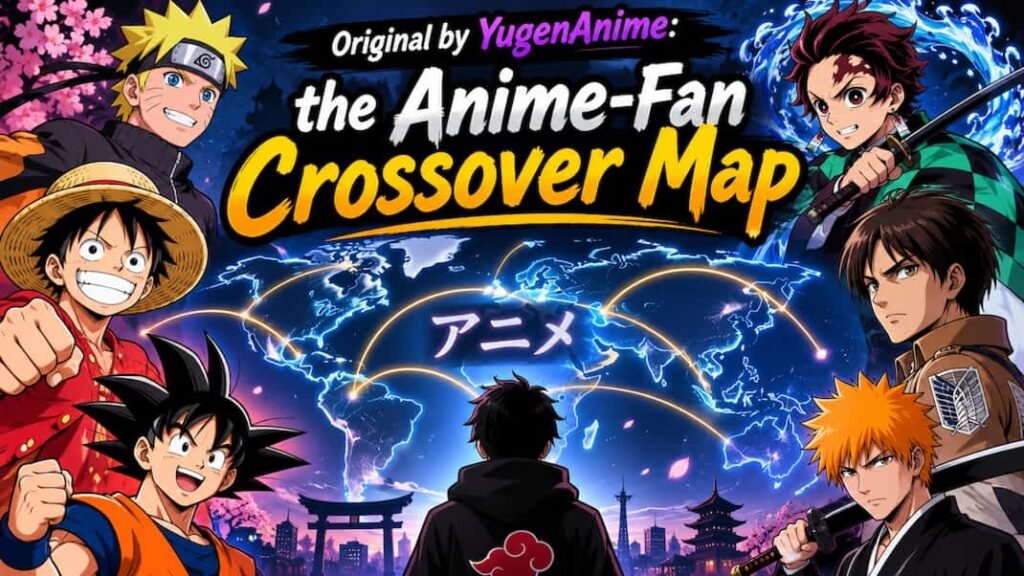
YugenAnime’s original crossover map matches manga genres to their closest American comics, so anime fans can cross over without guessing. These are editorial picks, not third-party claims.
- If you love battle shonen (Naruto, Demon Slayer): try Invincible (Robert Kirkman, Image Comics). Escalating fights, real consequences, and a complete story.
- If you love dark fantasy manga (Berserk): try Monstress (Marjorie Liu and Sana Takeda, Image Comics). Dense mythology and award-winning art.
- If you love shojo romance: try Lumberjanes (BOOM! Studios). Friendship-first warmth with an adventure engine.
- If you love slice-of-life: try Bone (Jeff Smith, Cartoon Books). Cozy, funny, and secretly epic.
- If you love sci-fi epics: try Saga (Brian K. Vaughan and Fiona Staples, Image Comics). The closest comics come to a prestige anime original.
- If you love mystery and psychological twists: try Watchmen (Alan Moore and Dave Gibbons, DC Comics). A finite twelve-issue story that rewards careful reading.
- If you love historical drama: try Maus (Art Spiegelman, Pantheon). The Pulitzer-winning graphic novel that proved comics are literature.
- If you love comedy with heart: try Scott Pilgrim (Bryan Lee O’Malley, Oni Press). Manga-style art with a complete six-volume arc.
The 3-Question Format Finder: a reusable template
YugenAnime’s readers can reuse this template for any manga or comic purchase, not just the examples above.
- Do you want a complete story or an ongoing world? Complete story → manga volumes or standalone graphic novels. Ongoing world → Marvel/DC trades.
- Does color matter to you? If black-and-white feels like a downgrade, start with full-color comics like Saga or Amulet before trying manga.
- What is your budget per month? One manga volume or one trade paperback is the unit; never start with single issues or magazine subscriptions.
Mistakes anime fans make when switching mediums
YugenAnime sees anime fans repeat the same five mistakes when they cross between manga and comics.
Assuming “comics” means superheroes. The indie two-thirds of the American market has no capes. Check the publisher before judging the medium.
Reading manga left-to-right. Every beginner does it once. Trust the publisher’s direction note for the first ten pages.
Starting comics with a random #1. A first issue from 1963 is homework, not an entry point. Start with a trade paperback Vol. 1 or a standalone graphic novel.
Expecting manga endings in superhero comics. Shared universes do not end; they hand off. If you need closure, read manga or standalone graphic novels.
Buying by cover era. A dated cover can hide a timeless story in both mediums. Read the format and the “Best use” line, not the cover date.
Treating all manga as one genre. “I like anime” is not a manga taste; shonen, shojo, and seinen are as different as action films and dramas. Name your anime genre first, then match the manga shelf, then use the Crossover Map for comics.
Frequently asked questions
Are manga and comics the same thing?
No. Manga means comics from Japan, usually black-and-white and read right-to-left. American comics are full-color, read left-to-right, and often share long-running universes. They are related mediums with different rules, as YugenAnime’s table above shows.
Which should I read first as an anime fan?
Start with manga if you want the stories behind your favorite anime; start with comics if you want full-color art and new worlds. Either way, buy collected volumes: manga tankobon or comics trade paperbacks.
Is manga read back to front?
English manga keeps the original Japanese orientation, so you start at what looks like the back cover and read right-to-left. Publishers print a direction guide on the first page. Your eyes adapt within a chapter.
Do I need to know decades of history to read American comics?
Not if you pick the right entry point. Standalone graphic novels and trade paperback Vol. 1s from indie publishers need zero background. The continuity problem mostly affects long-running Marvel and DC superhero series.
What is the difference between a comic, a trade paperback, and a graphic novel?
A comic usually means a single ~20-page issue. A trade paperback collects five or six issues in order. A graphic novel is a complete story published directly as a book. Britannica notes the term was popularized by Will Eisner, the American comics artist behind A Contract with God (1978).
Are there American comics drawn like manga?
Yes. English-language manga-style comics are sometimes called OEL manga or amerimanga. Scott Pilgrim by Bryan Lee O’Malley is the most famous bridge title, and YugenAnime’s best-comics list has more.
Have manga and American comics ever crossed over?
Yes, in both directions. Kodansha Comics published the Attack on Titan Anthology, with Western comic artists drawing in the Titan universe. Marvel and DC characters have appeared in manga-style adaptations too. The two industries watch each other closely, which is why the bridge titles keep coming.
Key takeaways
- Manga vs comics comes down to nine dimensions: origin, art, reading direction, creator model, story structure, format, genres, publishing, and the superhero barrier.
- Manga gives you one creator’s complete black-and-white story, read right-to-left and collected in tankobon volumes.
- American comics offer full-color stories, often in shared universes with rotating teams, best accessed through trade paperbacks.
- Beginners in both mediums should buy collected volumes, never single issues or magazine chapters.
- YugenAnime’s Crossover Map and 3-Question Format Finder turn the comparison into a buying decision.
To see manga’s art at its best, explore our roundup of the best anime manga panels — the single pages where the medium’s visual storytelling shines.