Introduction
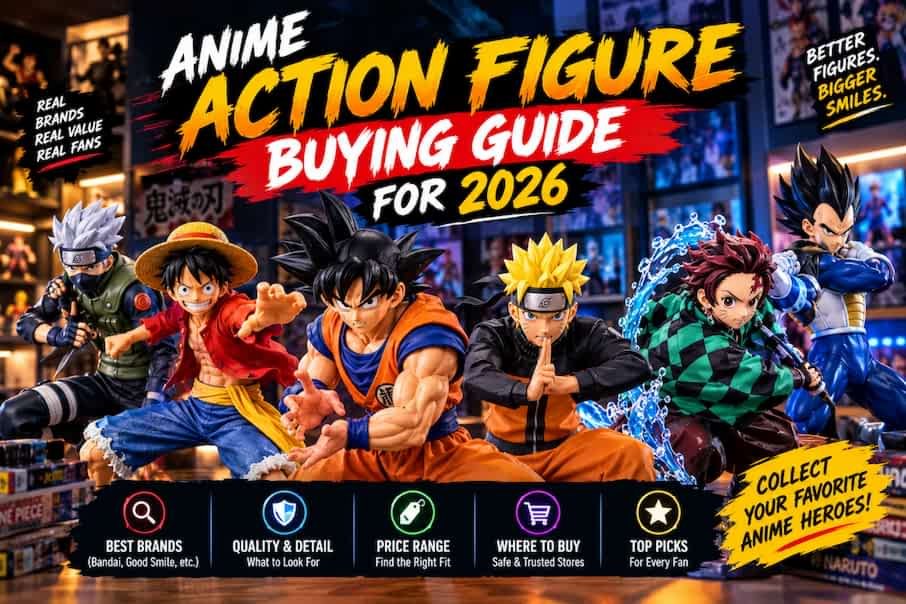
A single Frieza figure with interchangeable parts and a display base can run you more than a used video game console. That’s the part nobody tells you before you fall down the anime action figure rabbit hole on social media. One minute you’re admiring a Demon Slayer Nendoroid in someone’s shelf photo, the next you’re trying to figure out why one Goku figure costs $25, and another costs $220.
This guide skips the hype and gets straight to what matters: realistic price ranges, which brands consistently deliver quality, which characters are worth your shelf space in 2026, and how to avoid getting burned by a bootleg. Whether you’ve got $30 to spend or $300, you’ll walk away knowing exactly what to buy and why.
What Counts as an Anime Action Figure?

The term “anime action figure” gets used loosely online, and that’s part of why new collectors get confused at checkout. Not every anime collectible is actually poseable, and plenty of what’s marketed as a “figure” is really a static statue with zero articulation.
A true anime action figure has moving joints, usually at the neck, shoulders, elbows, and hips, so it can hold different poses. Static figures, often called PVC statues or scale figures, are sculpted in one fixed pose and can’t move at all. Both are collectible, but they serve different purposes on a shelf.
The confusion mostly comes from marketplaces lumping both categories under one search tag. A Dragon Ball Z statue frozen mid-punch and a fully articulated S.H.Figuarts figure of the same character might sit next to each other in search results with nearly identical photos. The difference only becomes obvious once you check the product description for words like “articulated,” “jointed,” or “poseable.”
This matters more than it sounds like it should. If you want to recreate fight scenes or swap expressions and accessories, you need genuine articulation, which usually means brands like Bandai’s S.H.Figuarts or Max Factory’s Figma line. If you just want something gorgeous to look at that never moves, a Banpresto or Bellfine statue will usually cost less and look more dynamic in a single frozen pose.
How Much Should You Expect to Pay?
Price is where most beginners get genuinely blindsided, because anime figures span an enormous range depending on brand, scale, and how limited the run was. A reasonable mental model is to think in three tiers rather than trying to memorize individual prices.
Budget figures like Banpresto prize figures or Pop Up Parade run roughly $20 to $45. Mid-range articulated figures like S.H.Figuarts or Figma typically land between $50 and $90. Premium scale statues and limited collaboration pieces can range from $150 to well past $400, depending on size and exclusivity.
The jump between tiers usually comes down to manufacturing detail and material quality, not just hype. A $30 prize figure is typically made with simpler PVC molds and less paint detail, which is fine for casual display but shows its limits up close. A $70 S.H.Figuarts figure, by contrast, usually includes swappable hands, multiple face plates, and tighter joint engineering that holds poses without sagging.
Limited editions and convention exclusives sit in their own category entirely. These pieces often get marked up two to five times their original retail price on the secondary market within months of selling out. If a figure’s price looks unusually high compared to similar pieces from the same line, check whether it was a limited run before assuming it’s simply expensive by nature.
Which Anime Action Figure Brands Are Worth Your Money?
Brand reputation genuinely matters more in this hobby than it does in most collectible categories, because quality control varies wildly between manufacturers. A handful of companies have built real trust over the years, and knowing their strengths saves you from guessing.
Bandai’s S.H.Figuarts line leads in articulation and show-accurate sculpting for shonen characters. Good Smile Company’s Nendoroid and Pop Up Parade lines dominate the budget-friendly, chibi-style segment. Max Factory’s Figma offers a middle ground with strong articulation at a lower price than Figuarts. Kotobukiya and Medicom’s MAFEX round out the premium detail tier.
Bandai S.H.Figuarts and Figma
S.H.Figuarts has become the default choice for serious Dragon Ball, Naruto, and Jujutsu Kaisen collectors because the sculpts closely match on-screen proportions and the joints are engineered for dynamic combat poses. Figma, made by Max Factory, takes a slightly different approach with a more exaggerated articulation system and interchangeable face plates that often cost less than a comparable Figuarts release.
If you’re torn between the two, Figuarts tends to win on realism while Figma often wins on sheer poseability.
Good Smile Company Nendoroid and Pop Up Parade
Nendoroid figures take the opposite aesthetic approach entirely, using an oversized head and simplified body to create a cute, chibi-style version of the character.
They’re genuinely well-built for the price, with swappable faces and small prop accessories included in nearly every box. Pop Up Parade, also from Good Smile, skips articulation entirely in favor of affordable static figures that still carry solid sculpt quality, making it a smart entry point for anyone testing whether this hobby is worth the investment.
Popular Characters Worth Collecting in 2026
Character choice drives resale value and long-term satisfaction more than brand does, since even a great figure of an obscure character will sit at a steep discount on secondary markets. Some characters have proven shelf-life, while others are riskier bets tied to a single season’s popularity.
Long-running shonen leads like Goku, Naruto, Luffy, and Tanjiro remain the safest picks because their demand doesn’t disappear between anime seasons. Characters from currently airing hits carry more upside but also more risk if the show’s popularity fades. Villains and side characters from beloved arcs often become surprisingly valuable once their initial print run sells out.
Shonen Icons Still Dominating Shelves
Goku, Luffy, Naruto, and Tanjiro remain consistently strong sellers across every major figure line, largely because their source material keeps getting new seasons, movies, or spinoffs that refresh interest. A Super Saiyan Goku Figuarts release, for instance, tends to hold its value well specifically because Dragon Ball has such a long, uninterrupted fan base rather than depending on a single trending moment. If you want a figure that won’t feel dated or forgotten in two years, these legacy characters are the safer bet.
Underrated Characters Gaining Value
Side characters from beloved arcs, like supporting cast members from Jujutsu Kaisen or Chainsaw Man, often get overlooked at release and then quietly climb in resale price once fans realize the figure sold out faster than expected. This is a pattern worth watching rather than chasing blindly. A smart approach is tracking which secondary characters get unusually strong fan art and cosplay attention online, since that interest often predicts which figure will become hard to find a year later.
How Do You Choose the Right Scale and Display Size?
Scale confuses almost everyone starting, because figures are usually labeled with ratios like 1/7 or 1/8 rather than actual height in inches. Getting this wrong means your figure either dwarfs your shelf or looks lost next to everything else you own.
Standard S.H.Figuarts and Figma figures run roughly 5.5 to 6 inches tall, fitting comfortably on a single shelf slot. Nendoroids sit around 4 inches due to their chibi proportions. Premium 1/7 scale statues can reach 9 to 11 inches and need significantly more display depth and a sturdier shelf.
Before buying, measure your actual display space rather than estimating by eye, since a cluttered desk can make an 11-inch statue look smaller in photos than it actually is in person.
It also helps to decide whether you’re building a themed shelf around one series or mixing scales across different shows. Mixing a 4-inch Nendoroid next to an 11-inch premium statue of the same character can look intentional and fun, but mixing random scales without any visual logic tends to make a collection look cluttered rather than curated.
How Can You Spot a Bootleg Before You Buy?
Bootleg anime figures, often called KO figures or “recasts” in collector circles, have gotten disturbingly good at mimicking official packaging. This is the single biggest risk new collectors face, especially when shopping on marketplaces with limited seller verification.
Check for a JAN barcode and official manufacturer sticker, compare the box photography against the manufacturer’s own website, and be suspicious of prices more than 30% below typical retail. Paint bleed, soft plastic smell, and loose joints are common giveaways once the figure arrives. When in doubt, buy from a retailer that explicitly guarantees authenticity.
A few practical checks go a long way here. First, search the exact product name plus “bootleg” or “fake” before buying, since collector forums and YouTube reviewers frequently document known counterfeits for popular releases. Second, look closely at the box: official Bandai and Good Smile packaging uses sharp, consistent print quality, while bootlegs often have slightly blurry text or mismatched colors around the character art. Third, compare the listed price against at least two other retailers, because a figure priced dramatically lower than everywhere else is a signal worth taking seriously rather than ignoring because of the discount.
Where Should You Buy Anime Action Figures?
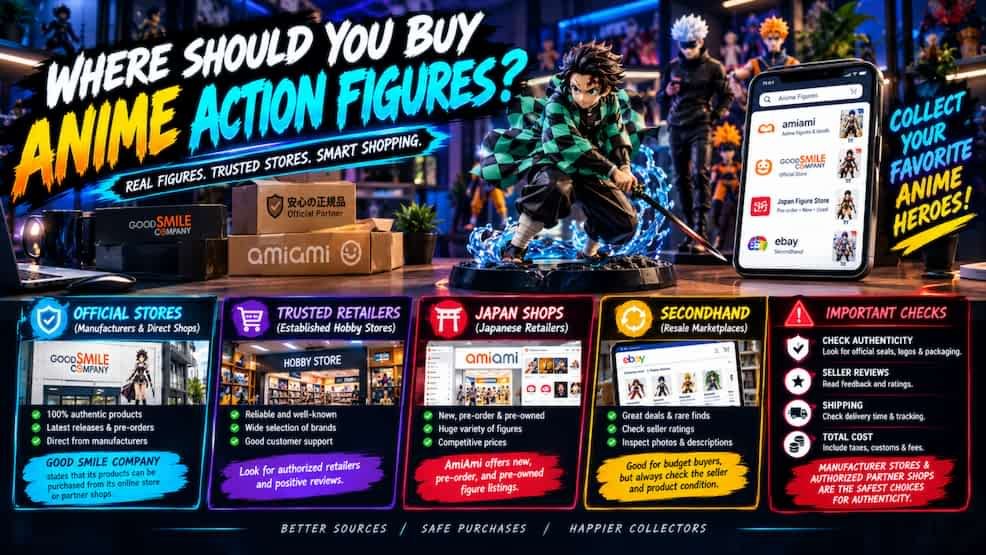
Where you buy matters almost as much as what you buy, since the same figure can be a safe purchase from one seller and a gamble from another. A handful of channels have earned trust in the collector community over time.
Official manufacturer storefronts and large authorized retailers like Crunchyroll Store, HobbyLink Japan, and Good Smile’s own online shop are the safest options for new releases. Local comic shops and hobby stores offer the advantage of inspecting the figure before buying. Secondhand marketplaces work well for discontinued pieces, but carry higher bootleg risk and require extra diligence.
Preordering through an authorized retailer is usually the smartest move for any figure you genuinely want, since many popular releases sell out within hours of becoming available and secondary market prices spike almost immediately after.
Local hobby shops, while sometimes pricier, let you physically check paint quality and joint tightness before handing over your money, which online shopping simply can’t offer. If you do shop secondhand for an older or discontinued figure, stick to sellers with detailed photos of the actual item rather than stock manufacturer images, since that’s often the easiest way to catch a bootleg before it ships.
Are Anime Action Figures a Good Investment?
This question comes up constantly, usually from people who’ve seen a viral post about a figure reselling for ten times its original price. The honest answer is more complicated than either “yes, always” or “no, never.”
Most anime action figures are not reliable financial investments and shouldn’t be bought purely to resell later. A small percentage, usually limited editions or figures from characters that unexpectedly surge in popularity, do appreciate significantly. Treat any potential resale value as a bonus on top of genuine enjoyment, not the primary reason to buy.
The figures that do appreciate tend to share specific traits: a limited production run, a sudden spike in the character’s popularity after release, or discontinuation by the manufacturer.
Predicting these ahead of time is genuinely difficult even for experienced collectors, which is why buying purely for resale potential is a riskier strategy than it looks on social media. A more sustainable approach is buying figures of characters and series you personally care about, so even if resale value never materializes, you still end up with something you’re happy to own and display.
FAsQs
What is the difference between an anime figure and an action figure?
An anime figure is a general term covering any collectible model from an anime series, including both static statues and poseable pieces. An action figure specifically refers to a figure with movable joints designed for posing. Every action figure is technically an anime figure if it’s based on an anime character, but not every anime figure qualifies as an action figure.
How much do anime action figures cost?
Prices typically range from about $20 for budget prize figures up to $400 or more for premium limited editions. Most mid-range articulated figures from brands like S.H.Figuarts or Figma fall between $50 and $90. Limited collaborations and convention exclusives often cost significantly more once they hit the secondary market.
What is the most popular anime action figure line?
Bandai’s S.H.Figuarts consistently ranks among the most popular lines due to its articulation quality and broad coverage of major franchises like Dragon Ball, Naruto, and One Piece. Good Smile Company’s Nendoroid line rivals it in popularity within the budget and chibi-style segment. Popularity varies somewhat by region and which franchises are trending that year.
Are anime action figures a good investment?
Generally, no, most figures aren’t reliable investments and lose some resale value after their initial release window closes. A small subset of limited editions or figures tied to suddenly popular characters can appreciate meaningfully. Collectors should buy primarily for enjoyment rather than expecting guaranteed returns.
How can you tell if an anime figure is bootleg or fake?
Check for an official manufacturer barcode and sticker, compare box printing quality against the brand’s official website photos, and be wary of prices far below typical retail. Once the figure arrives, soft or cheap-feeling plastic, paint bleeding outside lines, and loose joints are common signs of a counterfeit.
What scale is best for anime action figures?
There’s no single best scale, since it depends on your display space and collecting goals. Standard 1/12 scale figures like S.H.Figuarts run around 5.5 to 6 inches and fit most shelves easily, while larger 1/7 scale statues reach 9 to 11 inches and work better as standalone centerpieces.
Conclusion
Collecting anime action figures doesn’t have to mean guessing at prices or risking a bootleg from an unfamiliar seller.
Three things matter most: understand what tier of figure you’re actually buying, stick with brands and retailers that have earned collector trust, and buy characters you genuinely care about rather than chasing resale hype. If you’re just starting, pick one character from a series you love, choose between a Nendoroid or a mid-range Figuarts based on your budget, and buy from an authorized retailer for your first piece.
From there, building a collection of anime action figures becomes a lot less about luck and a lot more about knowing what you’re looking at.