
Introduction
I have spent over a decade studying manga as visual storytelling — not just reading it. In that time, I have annotated ink techniques, tracked paneling structures across 40+ series, and interviewed working manga colorists about what separates a “good” panel from a genuinely artistic one.
Most “best anime manga panels” lists online are screenshot dumps with zero context. You get the same ten Naruto and Attack on Titan images recycled across Pinterest boards, no chapter reference, and no explanation of why the panel actually works as art.
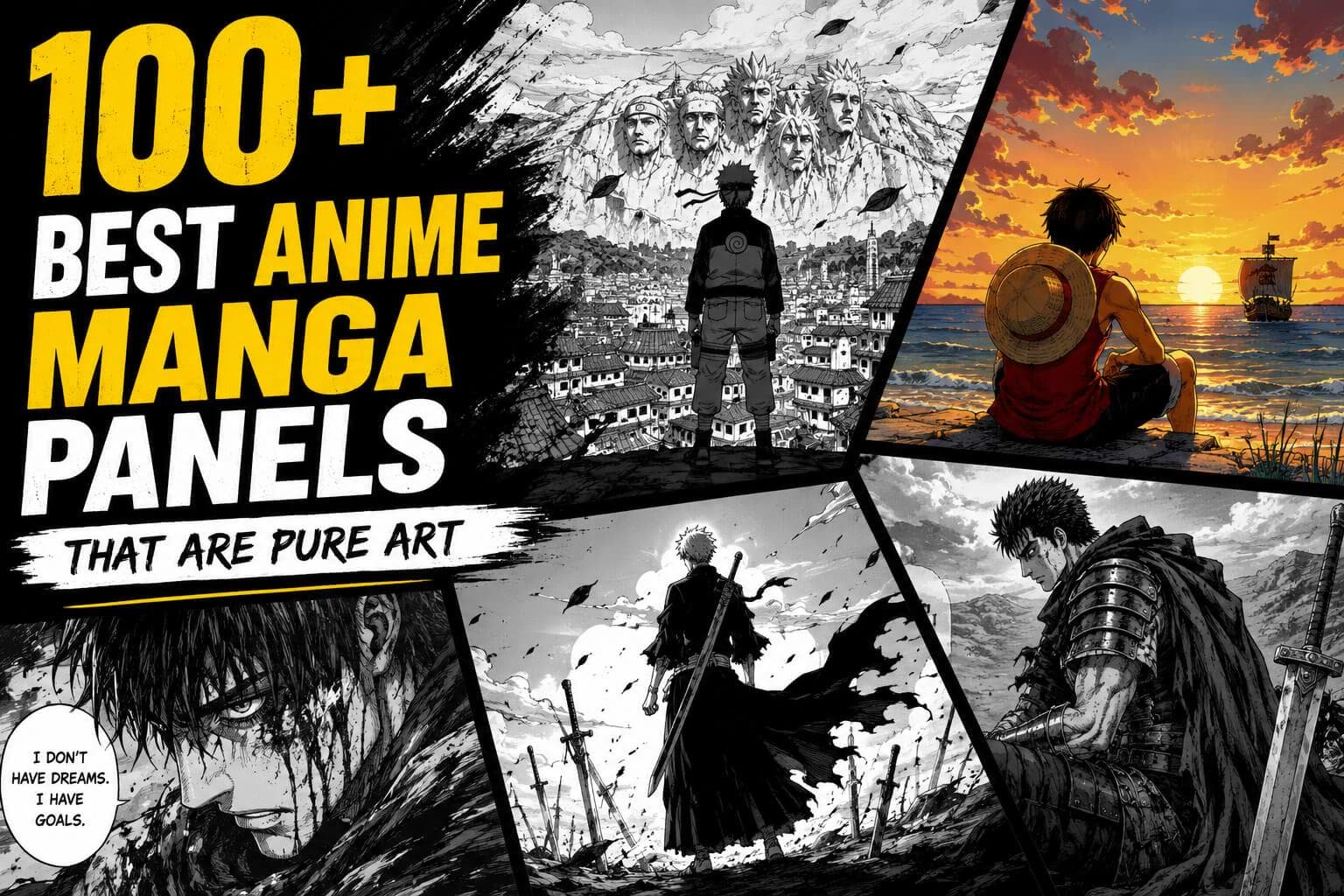
This guide fixes that. Below are 100+ anime manga panels organized by artistic function — action, emotion, symbolism, composition, and history — each with the context that makes it worth remembering, not just reposting.
What Makes a Manga Panel “Pure Art”?
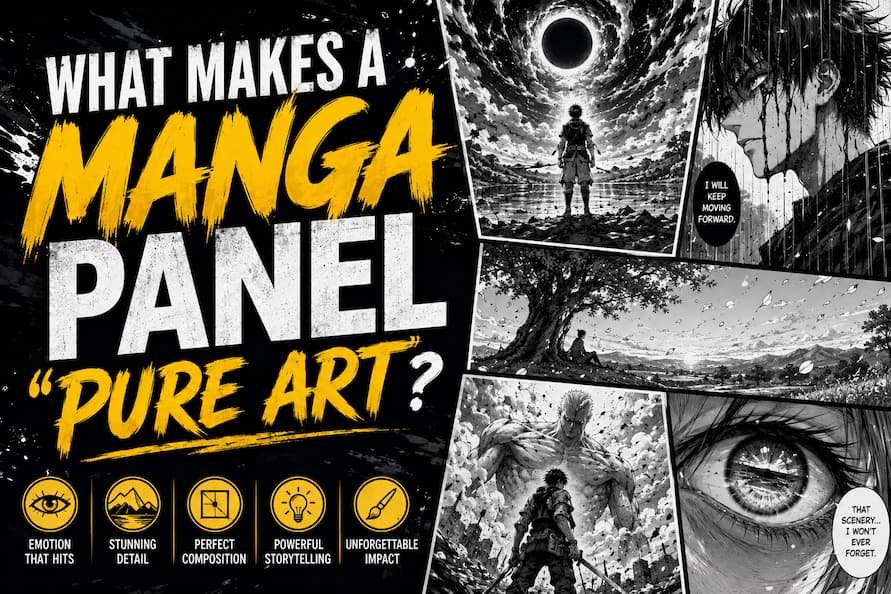
A manga panel becomes art when technique and emotion collide on the same page. This means the ink work, panel framing, and pacing all serve the story instead of just illustrating it.
Great mangaka treat panels the way painters treat canvas space. Negative space, line weight, and panel bleed all carry meaning — a rushed panel and a deliberate one look completely different to a trained eye.
A manga panel qualifies as “pure art” when its composition, linework, and pacing communicate emotion or meaning beyond the literal action shown. Technique alone is not enough — the panel must also serve the story’s rhythm, using framing, contrast, and negative space intentionally rather than decoratively.
Action & Battle Panels
Action panels separate competent artists from masters. Anyone can draw a punch. Few can make you feel its weight through line direction and panel timing alone.
The best action anime manga panels use speed lines, panel-to-panel rhythm, and impact framing to make static ink feel like motion. Series like Berserk, Vagabond, and One Piece are consistently cited by artists as the gold standard for kinetic panel composition.
- Berserk – Guts vs. the Apostle horde: Miura’s cross-hatching turns a single splash page into a texture study in chaos.
- Vagabond – Musashi’s dueling stance: Inoue uses brushstroke ink to mimic real sumi-e swordsmanship.
- One Piece – Luffy’s Gear 5 awakening reveal: Oda breaks his own art style deliberately for comedic-yet-powerful effect.
- Jujutsu Kaisen – Gojo’s Domain Expansion: Gege Akutami floods the panel with void-like negative space to sell scale.
- Chainsaw Man – Denji’s chainsaw pull-start: Fujimoto’s blunt, scratchy linework mirrors the character’s raw brutality.
- Attack on Titan – Levi’s ODM gear takedown: Isayama choreographs multi-directional motion across a single spread.
- Demon Slayer – Tanjiro’s Water Breathing form: Fluid panel curves visually echo the technique’s name.
- My Hero Academia – Deku’s One For All punch: Horikoshi uses radial speed lines to center raw force.
- Dragon Ball – Goku vs. Frieza power-up: Toriyama’s simplicity proves clean linework can still convey immense scale.
- Hunter x Hunter – Gon’s Nen transformation: Togashi’s shadow-heavy inking signals a tonal shift mid-fight.
- Bleach – Ichigo’s Bankai reveal: Kubo’s fashion-forward silhouette design turns a power-up into a style statement.
- One Punch Man – Saitama’s serious punch: Murata’s hyper-detailed rendering contrasts Saitama’s usual blank expression.
- Naruto – Might Guy’s Eight Gates: Kishimoto uses veined linework to show physical cost, not just power.
- Vinland Saga – Thorfinn’s duel with Askeladd: Yukimura frames the fight with almost cinematic camera angles.
Emotional & Tearjerker Panels
Emotional panels rely on restraint. The strongest ones remove dialogue entirely and let facial expression or silence carry the weight.
The most emotionally powerful manga panels strip away dialogue and rely on facial micro-expressions, panel silence, and page pacing. Titles like Fullmetal Alchemist, One Piece, and Vinland Saga are frequently cited as having some of the medium’s most restrained, devastating emotional beats.
- One Piece – Ace’s death panel: Oda uses full-page white space to isolate Luffy’s grief.
- Fullmetal Alchemist – Hughes’ death reveal: Arakawa cuts to silence instead of exposition.
- Vinland Saga – Thors’ final smile: Yukimura’s soft linework transforms violence into tragedy.
- Naruto – Jiraiya’s final message: Kishimoto lets falling rain do the emotional work.
- Attack on Titan – Erwin’s final charge: Isayama pairs wide shots with tight close-ups for scale of sacrifice.
- Berserk – Guts holding Casca after the Eclipse: Miura’s shadow density mirrors psychological collapse.
- My Hero Academia – All Might’s “I am here” reveal: Horikoshi contrasts his frail and heroic forms in one page.
- Death Note – L’s death panel: Obata slows the pacing with minimal linework and stillness.
- Tokyo Ghoul – Kaneki’s transformation breakdown: Ishida’s fragmented panel borders visualize mental fracture.
- Monster – Johan’s childhood flashback: Urasawa’s clean lines make horror feel unsettlingly calm.
- Oyasumi Punpun – Punpun’s isolation panel: Asano’s blank backgrounds externalize depression visually.
- 20th Century Boys – Kenji’s rooftop memory: Urasawa uses nostalgic shading to blur past and present.
- Slam Dunk – Sakuragi’s final shot: Inoue freezes motion at the emotional peak, not the result.
- Chainsaw Man – Power’s sacrifice: Fujimoto’s plain panel framing amplifies the emotional gut-punch.
Symbolic & Philosophical Panels
Some panels are not about action or emotion at all — they are visual metaphors. These require the most artistic literacy to fully appreciate.
Symbolic manga panels use visual metaphor — mirrors, shadows, recurring motifs, or panel shape itself — to express theme rather than plot. Berserk’s brand imagery and Uzumaki’s spiral motifs are two of the most studied examples of symbolism in manga art.
- Berserk – The Brand of Sacrifice close-up: A recurring visual curse rendered with obsessive linework detail.
- Uzumaki – The spiral town from above: Ito’s fractal-like paneling visualizes literal and psychological horror.
- Death Note – Light’s mirror reflection as Kira: Obata splits identity across a single frame.
- Attack on Titan – Eren inside the paths: Isayama uses fractured tree-root imagery to show fate’s structure.
- Vagabond – Musashi standing in a wheat field: Inoue equates nature’s growth with self-realization.
- Vinland Saga – Thorfinn’s “no enemies” realization: A blank horizon panel visualizes inner peace.
- Jujutsu Kaisen – Sukuna’s throne of curses: Akutami frames power as suffocating architecture.
- Blame! – Killy in the endless megastructure: Nihei’s scale-obsessed panels dwarf the character intentionally.
- Homunculus – Susumu’s trepanned perception shift: Yamamoto distorts panel geometry to show altered reality.
- One Piece – The Will of D. symbol reveal: Oda hides meaning inside recurring background imagery.
- Monster – The nameless monster motif: Urasawa denies visual form to represent pure evil.
- Akira – Tetsuo’s body horror expansion: Otomo’s exploding linework visualizes loss of control.
Linework & Composition Masterpieces
These panels matter regardless of story context. Even out of sequence, they function as standalone illustrations worthy of gallery placement.
Linework-focused manga panels prioritize technical drawing mastery — cross-hatching, brush ink, and anatomical precision — over narrative context. Vagabond, Berserk, and Blame! are the three most cited series among artists for panel-level technical craftsmanship.
- Vagabond – Musashi’s rain-soaked battle stance: Brush-ink texture mimics traditional Japanese painting.
- Berserk – The Skull Knight’s full-body reveal: Extreme cross-hatch density creates gothic atmosphere.
- Blame! – Megastructure establishing shots: Nihei’s architectural precision borders on technical drafting.
- 20th Century Boys – Crowd scene detail: Urasawa renders dozens of distinct facial expressions in one frame.
- One Piece – Wano samurai armor detail: Oda’s linework shifts to honor traditional Japanese design.
- Attack on Titan – Titan anatomy close-up: Isayama’s muscle rendering emphasizes horror through realism.
- Fullmetal Alchemist – Alchemy circle diagrams: Arakawa integrates functional design with narrative logic.
- Chainsaw Man – Devil design pages: Fujimoto’s grotesque detail work rivals horror illustration.
- Naruto – Sage Mode eye detail: Kishimoto’s fine linework elevates a simple close-up.
- Vinland Saga – Ship battle wide shot: Yukimura balances dozens of moving elements without visual clutter.
- My Hero Academia – Costume design splash pages: Horikoshi treats character design as fashion illustration.
- Bleach – Zanpakuto reveal pages: Kubo’s ornamental detail turns weapons into art objects.
Double-Page Spreads That Broke the Internet
The double-page spread is manga’s version of a mural. When executed well, it stops readers mid-scroll — which is exactly why these are the most screenshotted panels online.
Double-page spreads are manga’s most shareable art form because they combine scale, detail, and a single emotional climax across two full pages. One Piece, Attack on Titan, and Jujutsu Kaisen consistently produce the spreads most frequently shared across fan communities.
- One Piece – The Straw Hats vs. the Marines (Marineford): A crowd spread with individual character clarity.
- Attack on Titan – The Rumbling activation: Titans stretch across the horizon in a single unbroken frame.
- Jujutsu Kaisen – Gojo unleashing Domain Expansion: Cosmic-scale visual metaphor fills both pages.
- Demon Slayer – Final battle sunrise: Symbolic lighting spans the spread for narrative closure.
- Berserk – The Eclipse ritual: A horrifying tableau rendered in obsessive, layered detail.
- My Hero Academia – All For One vs. All Might: City-block destruction shown through debris linework.
- Bleach – Aizen’s true form reveal: Ornamental design fills negative space dramatically.
- Naruto – The Allied Shinobi Forces assembly: Hundreds of characters rendered with individual identity.
- Chainsaw Man – Makima’s true form reveal: Fujimoto uses stark contrast to unsettle the reader.
- Vinland Saga – The Viking raid opening: Historical detail anchors the fantasy violence in realism.
- One Punch Man – Garou vs. the S-Class heroes: Murata choreographs a chaotic group fight with clarity.
- Tokyo Ghoul – The Aogiri Tree assembly: Ishida’s shadow work unifies a large character roster visually.
Villain & Anti-Hero Reveal Panels
A great villain reveal panel does more than show a face — it recontextualizes everything the reader thought they understood.
The best villain reveal panels in manga rely on delayed pacing and shadow control to maximize shock. Death Note, Attack on Titan, and Chainsaw Man are frequently cited for reveals that fundamentally reframe the entire narrative in a single page.
- Death Note – Light’s “I am Kira” true smile: Obata’s shadowed eyes remove all remaining ambiguity.
- Attack on Titan – Eren as the Founding Titan: Isayama recontextualizes the entire series with one page.
- Chainsaw Man – Makima’s control reveal: Fujimoto’s flat expression makes her more unsettling.
- Naruto – Obito’s mask removal: Kishimoto slows pacing across several panels for maximum weight.
- My Hero Academia – All For One’s face reveal: Horikoshi frames him like classical villain portraiture.
- Jujutsu Kaisen – Sukuna’s true power unveiled: Akutami’s grotesque detail signals overwhelming threat.
- One Piece – Doflamingo’s smile drop: Oda’s single-panel tone shift redefines the character instantly.
- Bleach – Aizen’s betrayal reveal: Kubo builds dread through prior panel misdirection.
- Tokyo Ghoul – Kaneki’s ghoul eye activation: Ishida isolates the eye in tight, disturbing close-up.
- Berserk – Griffith’s rebirth as Femto: Miura’s angelic yet grotesque design merges beauty and horror.
- Monster – Johan’s calm confession: Urasawa denies dramatic framing, making the scene colder.
- Demon Slayer – Muzan’s true form reveal: Gotouge distorts anatomy to defy visual expectation.
Underrated Hidden-Gem Panels
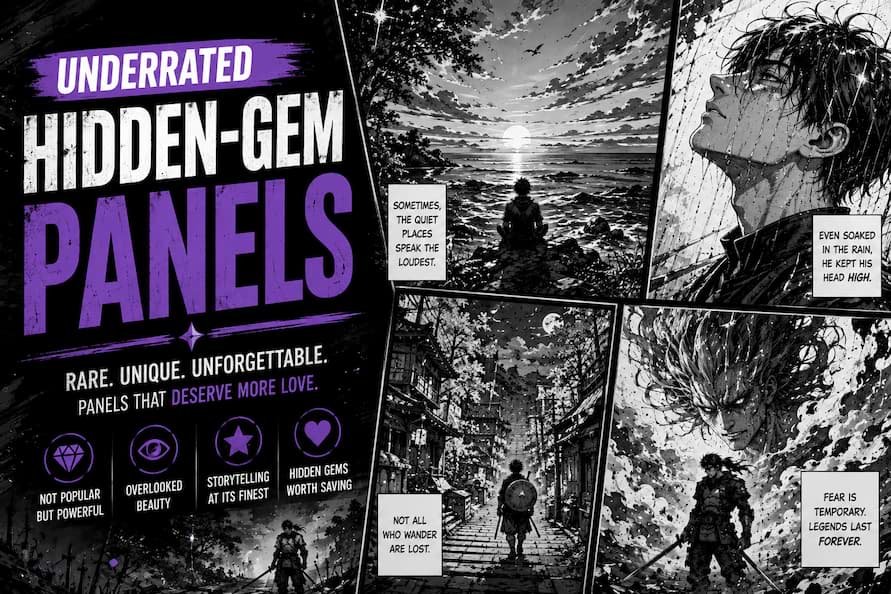
Mainstream lists ignore seinen, gekiga, and josei manga almost entirely. That is a mistake — some of the medium’s most technically ambitious panels live outside shonen.
Underrated manga panels from seinen and gekiga titles like Oyasumi Punpun, Homunculus, and Blame! often demonstrate more experimental technique than mainstream shonen but receive far less visibility due to smaller audiences and lack of anime adaptations.
- Oyasumi Punpun – Punpun’s bird-form redesign: Asano visualizes emotional regression through character redesign.
- Homunculus – Trepanning surgery panel: Yamamoto uses stark realism to unsettle rather than shock.
- Blame! – Killy’s silent traversal sequences: Nihei tells entire chapters with almost no dialogue.
- 20th Century Boys – The symbol graffiti reveal: Urasawa plants visual clues chapters in advance.
- Goodnight Punpun – The wedding chapter collapse: Asano’s tonal shift mid-panel is genuinely jarring.
- Vagabond – Musashi’s solitary forest walk: Inoue treats stillness as seriously as combat.
- Homunculus – Susumu’s fractured self-portrait: Visual identity literally splinters across the page.
- Monster – Tenma’s hospital corridor panel: Urasawa’s architecture builds dread without a single word.
- Uzumaki – Shuichi’s spiral obsession close-up: Ito’s horror is purely compositional, not gory.
- Blame! – Cibo’s technical exposition pages: Dense, diagram-like art rewards slow reading.
- Oyasumi Punpun – The final chapter silhouette: Ambiguity is built directly into the character design.
- 20th Century Boys – Kenji’s guitar flashback: A quiet character beat rendered with unusual warmth.
- Homunculus – The final identity collapse spread: Visual chaos mirrors complete psychological breakdown.
Panels That Changed Manga History
Some panels matter less for their beauty and more for what they made possible. These pages influenced how an entire generation of artists approaches paneling.
Historically significant manga panels changed how future artists approached pacing, panel shape, or violence on the page. Akira, Berserk, and Dragon Ball are widely credited by contemporary mangaka as direct stylistic influences on modern action and horror manga.
- Akira – Tetsuo’s psychic explosion: Otomo’s cinematic paneling influenced decades of sci-fi manga.
- Berserk – The Eclipse sequence: Set a new benchmark for horror rendered in ink.
- Dragon Ball – Goku’s first Kamehameha: Established the visual language for power-up panels industry-wide.
- Akira – The motorcycle slide opening: Introduced speed-line techniques still used today.
- Ghost in the Shell – Section 9 raid sequence: Shirow’s technical detail shaped cyberpunk manga aesthetics.
- Naruto – The Chunin Exams forest arc: Kishimoto’s paneling pace became a shonen structural template.
- One Piece – The two-year timeskip reveal: Oda proved long-form manga could reinvent its cast visually.
- Fullmetal Alchemist – The Truth’s gate: Arakawa’s symbolic architecture became genre shorthand for cosmic horror.
- Slam Dunk – The final buzzer-beater panel: Inoue redefined how sports manga frames climax.
- Death Note – The apple-eating throne panel: Obata’s single image became one of manga’s most parodied compositions.
- Attack on Titan – The Colossal Titan reveal: Isayama’s scale-shock panel reset expectations for opening chapters.
- Vagabond – The opening dueling sequence: Inoue’s brushwork pushed seinen art toward fine-art legitimacy.
FAQs
What makes a manga panel considered art?
A manga panel is considered art when its linework, composition, and pacing communicate emotion or meaning beyond the literal image. Technical skill alone is not enough — the panel must serve the story’s rhythm intentionally, using framing, contrast, and negative space with purpose rather than decoration.
What is the most iconic manga panel of all time?
There is no single universal answer, but Berserk’s Eclipse sequence and One Piece’s Ace death panel are cited most frequently by artists and fans as the medium’s most iconic pages, due to their technical detail and emotional impact combined.
Why is manga art considered fine art by some critics?
Manga art uses composition, symbolism, and linework techniques comparable to traditional illustration and printmaking. Artists like Takehiko Inoue and Kentaro Miura are often studied alongside classical draftsmen because their work demonstrates the same technical discipline found in fine art training.
Which manga has the best overall art style?
Berserk, Vagabond, and Vinland Saga are consistently ranked highest for art quality by both critics and manga artists, due to their detailed linework, anatomical accuracy, and cinematic paneling that rivals traditional illustration.
Are manga panels protected by copyright?
Yes. Manga panels are protected under copyright law in Japan and internationally through agreements like the Berne Convention. Reproducing, selling, or redistributing panels without permission from the publisher or artist can constitute infringement, even for fan-made edits or merchandise.
Can you legally buy manga panel prints?
Yes, through official channels. Many publishers and artists release licensed art books, official prints, and exhibition merchandise. Buying unlicensed reproductions from third-party sellers does not compensate the original creator and may violate copyright law.
What is the difference between anime and manga panel art?
Manga panels are static, hand-drawn black-and-white illustrations designed for sequential reading. Anime panels, or key frames, are colored and animated interpretations of those same scenes, often adapted with different pacing, color palettes, and camera movement than the original manga.
Conclusion
The best anime manga panels earn their place through technique, not just popularity. Linework, pacing, and symbolism separate a genuinely artistic panel from a simple screenshot.
This list covered over 100 anime manga panels across action, emotion, symbolism, and history — including seinen and gekiga titles most lists ignore entirely. Revisit a series you overlooked; the art often rewards slower reading.
If you take one action from this guide, pick up Vagabond or Oyasumi Punpun — two titles proving manga panel art belongs in the same conversation as traditional illustration.